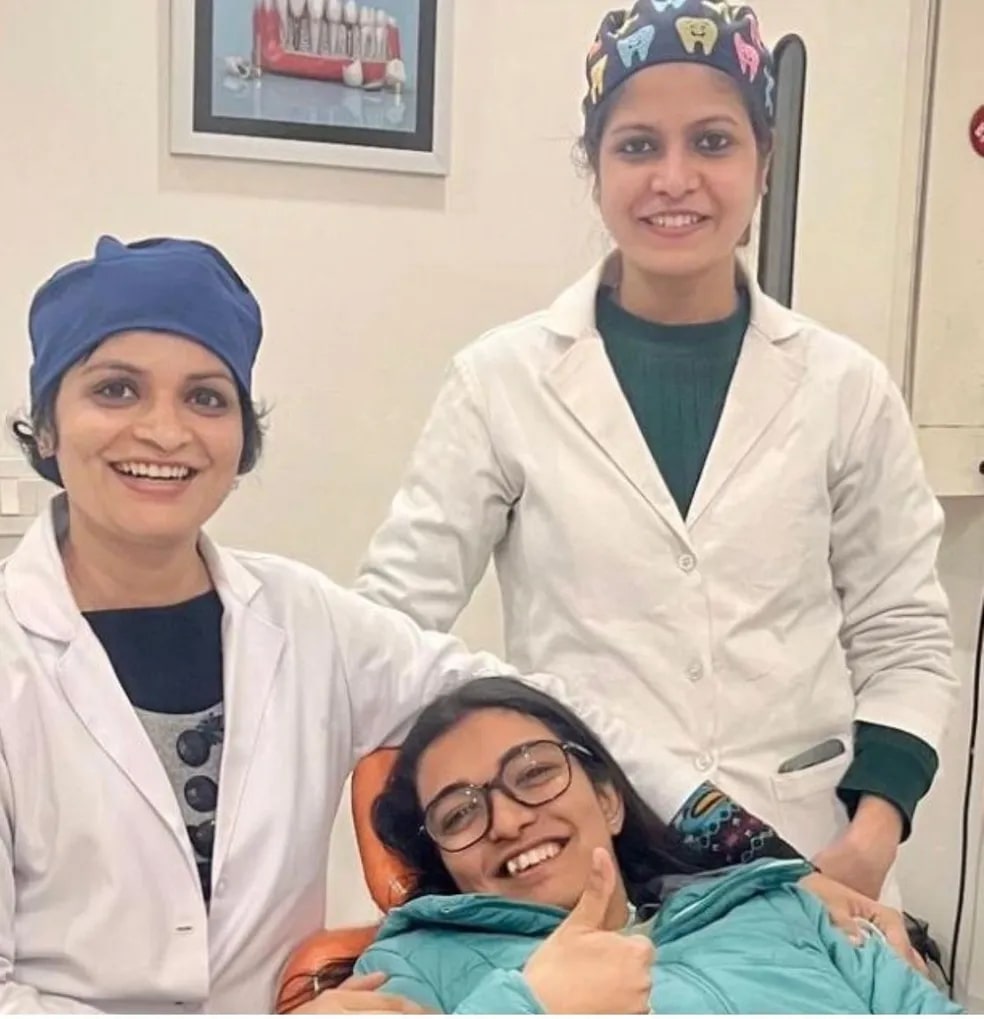
You look in the mirror and notice that your front teeth overlap. Maybe you have had crooked teeth since childhood, or perhaps your teeth have shifted over the years. You can live with it, but brushing certain areas is difficult and you are not completely comfortable with your smile.
That is when seeing an Orthodontist in Gurgaon Sector 60 can make sense.
Orthodontics is not simply about making teeth look straight. It can also address certain bite and alignment problems that affect chewing, cleaning and long-term oral health.
An orthodontist specialises in diagnosing and treating problems related to the alignment of teeth and jaws.
Treatment may involve braces, clear aligners or other orthodontic appliances depending on the patient's age, dental condition and treatment goals.
You may benefit from an assessment if you have:
Crooked or crowded teeth
Large gaps between teeth
Teeth that overlap
An overbite or underbite
Difficulty biting or chewing
Teeth that are difficult to clean
A jaw that clicks or feels uncomfortable
Teeth that have shifted after previous orthodontic treatment
Concerns about your child's developing bite
You do not need to know which orthodontic problem you have before making an appointment.
Many patients focus entirely on appearance.
But tooth alignment can also affect how easily you clean between teeth and how your upper and lower teeth meet when you bite.
Depending on your individual condition, orthodontic treatment may help with:
Crowding: When there is not enough space for teeth to align properly.
Spacing: Noticeable gaps between teeth.
Overbite: When upper front teeth extend too far over the lower teeth.
Underbite: When lower teeth extend beyond the upper teeth.
Crossbite: When some upper teeth sit inside the lower teeth when biting.
Bite Irregularities: Problems with how the upper and lower teeth come together.
Not every alignment issue needs treatment, but an orthodontic assessment can clarify your situation.
A patient may come in mainly because they dislike crowded front teeth.
During the assessment, the orthodontist may discover that the concern is not only cosmetic. The patient's bite may also be uneven, or certain teeth may be harder to clean properly because of their position.
The treatment plan then focuses on both alignment and function rather than simply making the front teeth appear straighter.
The lesson is simple: what you see in the mirror may only be one part of the orthodontic problem.
When people hear “orthodontist,” they often immediately think of traditional metal braces.
Braces remain an effective treatment option, but they are not the only one.
Depending on the case, an orthodontist may discuss clear aligners, ceramic braces or other orthodontic approaches.
A treatment that works well for one patient may not be suitable for another.
Factors such as tooth movement required, bite complexity, age, oral health and treatment goals all matter.
This is why choosing an orthodontic appliance based only on appearance or social media is not a good idea.
There is a common belief that orthodontic treatment is mainly for teenagers.
That is outdated.
Adults can also benefit from orthodontic treatment, provided their teeth and gums are suitable for treatment.
Adults may choose orthodontics to improve alignment, address bite concerns or correct teeth that have shifted over time.
Age alone does not determine whether orthodontic treatment is appropriate.
Some people keep postponing orthodontic treatment because their teeth do not hurt.
But crooked or crowded teeth can sometimes make brushing and flossing more difficult. Certain bite problems can also become more noticeable over time.
That does not mean every orthodontic issue will become serious. It simply means that an assessment can help you understand whether treatment is useful now or whether monitoring is enough.
Your first visit is mainly about assessment and planning.
The orthodontist checks how your teeth are positioned and how the upper and lower jaws meet.
Depending on the case, dental X-rays or other records may be used to understand tooth roots, bone and jaw relationships.
You may be given options involving braces, clear aligners or other approaches, depending on your specific needs.
The important part is understanding the expected outcome, treatment duration and responsibilities involved.
The World Health Organization reported in 2025 that nearly 3.7 billion people worldwide are affected by oral diseases.
While orthodontics is not a treatment for all oral diseases, the statistic reinforces the importance of maintaining good oral health. Healthy teeth and gums are important foundations for orthodontic treatment.
If teeth overlap or are difficult to clean, an orthodontic assessment may help determine whether alignment treatment could improve the situation.
If your teeth do not meet comfortably or you have difficulty biting certain foods, discuss it with an orthodontist.
Teeth can move over time, including after previous orthodontic treatment. A consultation can help identify suitable options.
Before choosing an appliance, get a professional assessment. The treatment should be selected based on your dental needs.
At Signature Smiles Implants & Dental Clinic, we focus on understanding each patient's alignment and bite before recommending orthodontic treatment. Our approach includes discussing suitable options such as braces and clear aligners while considering oral health, treatment goals and long-term maintenance.
Before starting treatment, ask:
What exactly is wrong with my bite or alignment?
Do I actually need orthodontic treatment?
Which treatment options are suitable for me?
How long could treatment take?
What will I need to do at home?
What happens after the teeth are straight?
Will I need retainers?
Good questions lead to better expectations.
An orthodontist treats problems involving the alignment of teeth and jaws, including crowding, spacing and certain bite problems.
Yes. Adults can undergo orthodontic treatment when their teeth and gums are suitable. Treatment options depend on the individual case.
Neither is automatically better for everyone. Braces and clear aligners have different advantages and limitations. Your orthodontist can recommend an option based on your specific alignment problem.
Orthodontic treatment should not be about chasing a picture-perfect smile.
The better goal is to understand how your teeth fit together, whether alignment is affecting your oral health or function, and what treatment — if any — makes sense for you.
If you are searching for an Orthodontist in Gurgaon Sector 60, contact Signature Smiles Implants & Dental Clinic for an orthodontic assessment and discuss your treatment options before deciding between braces, aligners or monitoring.